
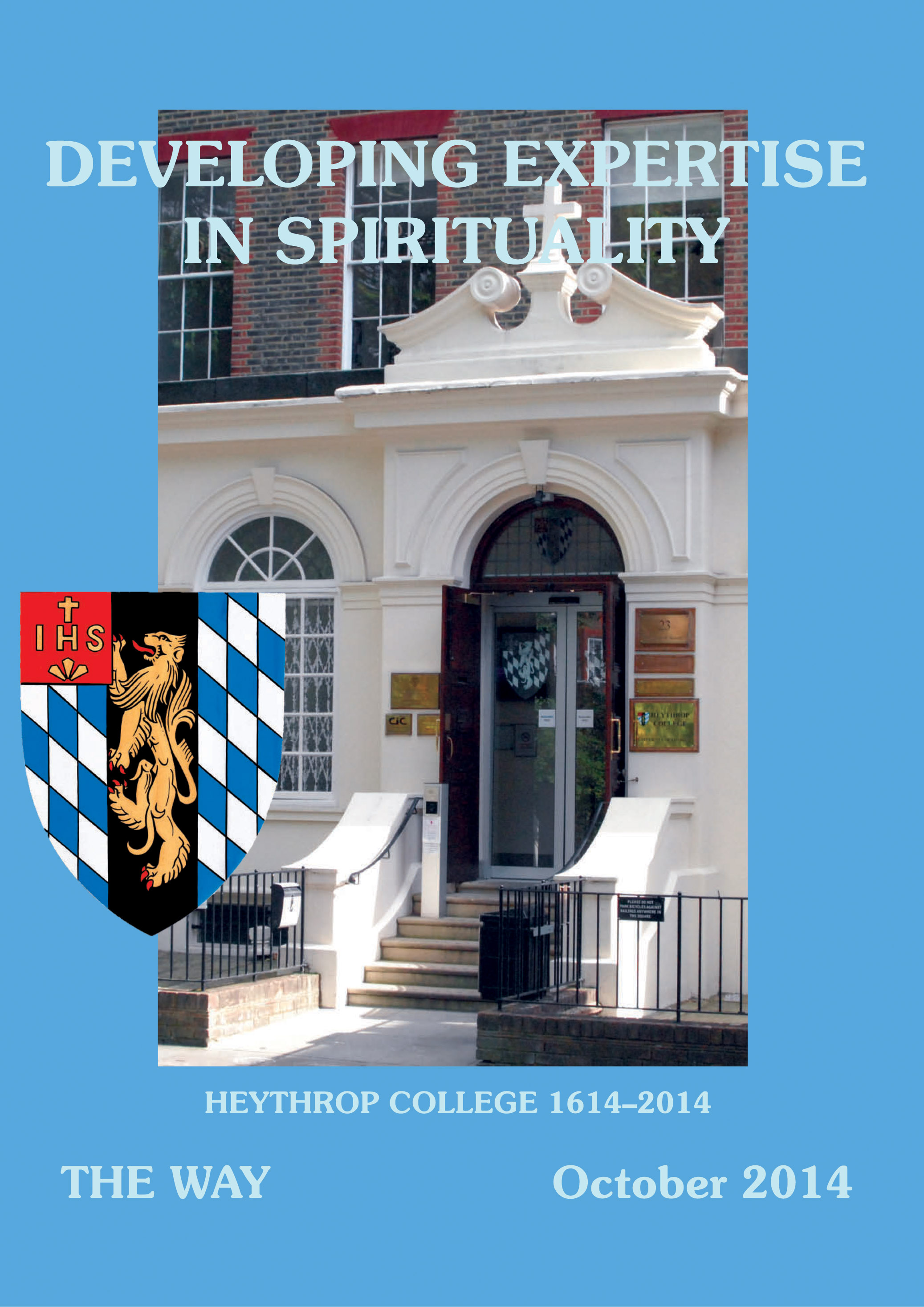
As you begin to read this foreword, I invite you first to pause and reflect for a moment. What would you expect an expert in spirituality to be like? There are (at least) two different kinds of answer to this question. One spontaneously considers spirituality as an academic discipline, a branch of theology and so, perhaps, having much in common with other disciplines such as history, literature, or even one of the sciences. From this perspective, an expert would be learned, well-read, an intellectual type. The other kind of answer regards spirituality as a practical skill or outlook, something developed and refined by religious practice. Here an expert would be one who is prayerful, empathetic, perhaps known as a good listener. Neither of these kinds of answer is any more correct than the other. Both find support and elucidation in the pages of this Special Issue of The Way. Four hundred years ago, Roman Catholicism was under attack in Britain. Any man wanting to train as a Catholic priest, or any child wanting a Catholic education, had little choice but to move to the European mainland, and to face great danger upon returning. Heythrop College, the Jesuit-run philosophy and theology college of London University, whose four-hundredth anniversary this issue of The Way celebrates, traces its origin to the Jesuit college founded in Louvain in 1614.
£3.00
0