
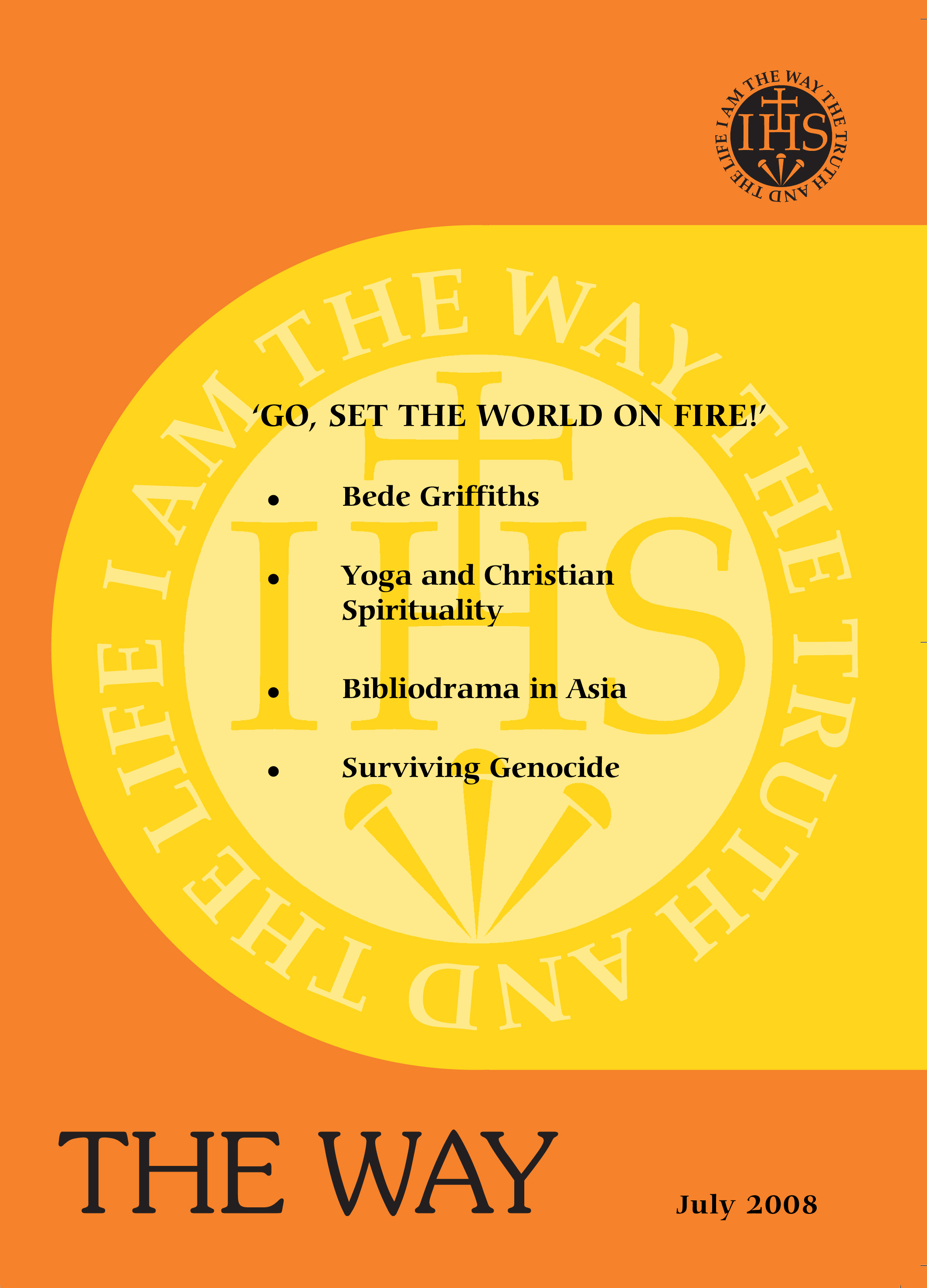
‘Go, set the world on fire!’ These are the words with which, in 1540, Ignatius of Loyola is said to have launched the epic missionary journey of his friend Francis Xavier. Over the following decade Francis would travel to India, Malaysia, Indonesia and Japan, before his death looking over the Chinese mainland. It was a time when new worlds were opening up, not just for merchants and conquistadors, but for the Church, as it strove to bring the word of God to these previously unknown peoples and nations. The excitement of that striving is palpable in Ignatius’ words. Yet the influence was not all to be one way. As these early missionaries laboured to make Christian teaching and practice comprehensible to people with wholly different cultures and outlooks, many of them were led to reconsider their understanding of their own beliefs. Nearly five centuries after Xavier blazed a path, the experience of Christians in Asia, Africa and South America continues to challenge European assumptions about how discipleship is to be lived out. This issue of The Way gathers a number of articles that consider how experiences of Christian faith in the countries of the South can and do enrich the faith of those who live in the North.
Adolfo Nicolás, ‘Conversation with Adolfo Nicolás’, 9–29
The recently elected Superior General of the Society of Jesus, Fr Adolfo Nicolás, talks about his life and experiences, and especially about his work in Japan and the Philippines. He reflects on his plans for the future as General.
Hans Gustafson, ‘The Spirituality of Bede Griffiths’, 31–48
The English Benedictine Bede Griffiths spent his life in India, and his Christian theology and spirituality were deeply influenced by Indian thought, and in particular by his dialogue with Hinduism. His work retains an enduring spiritual significance for Christians today.
John N. Sheveland, ‘The Meaningfulness of Yoga to Christian Discipleship’, 49–62
In the West the practice of yoga is sometimes mistakenly treated as no more than a physical discipline, or identified with New Age spirituality. But in fact it has much to offer to Christians and Christian spirituality.
Rudolf Pöhl, ‘Dei verbum Meets Homo ludens: Bibliodrama in South-East Asia’, 63–75
Bibliodrama enables people from diverse cultures and backgrounds to explore biblical texts and stories in a powerful and immediate way. A series of programmes and missions across Asia illustrates the value of this approach.
Juan Miguel Marin, ‘Contemplation and Action at the Hispanic-American Frontier’, 77–94
The Jesuit missionaries to Peru and their indigenous converts in the sixteenth century espoused a mystical theology which strengthened them in their ministry in a hard and challenging environment, according to the charism of contemplation in action. This article examines the lives of two Peruvian Jesuits and how they lived out this charism.
Antonio Ruiz de Montoya, ‘Firestone of Divine Love’, 95–97
Ruiz de Montoya, a sixteenth-century Jesuit born in Peru, argues that mystical prayer is not just for the initiated, but for everyone.
Pascale Dalcq, ‘Survival: A Grace ... A Decision’, 99–106
The genocide in Rwanda in 1994 was a source of horror and despair. But even after witnessing such events, hope and life and faith are still possible.