
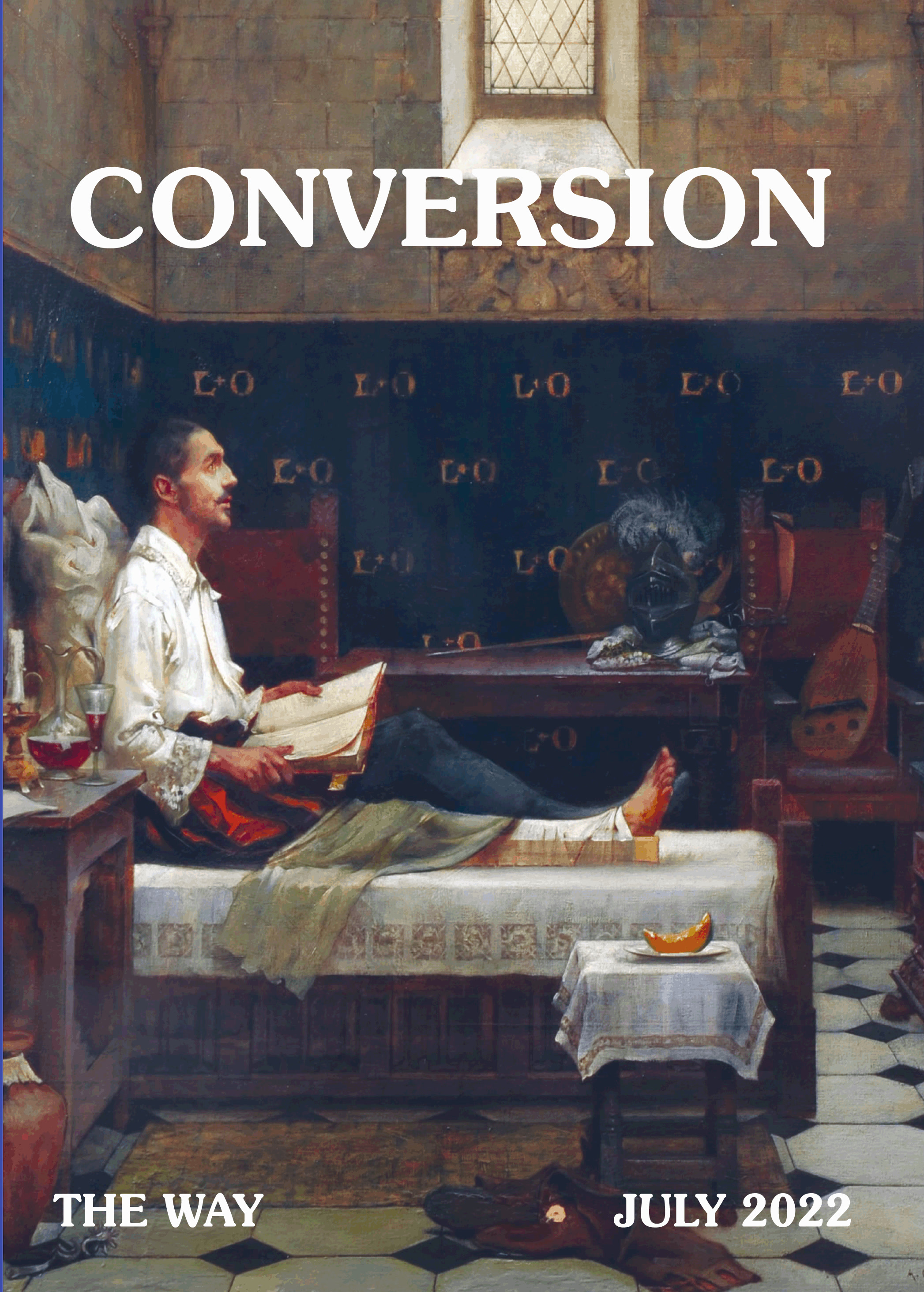
On 20 May 1521 the Basque knight Iñigo de Loyola was seriously injured by a cannonball while defending the town of Pamplona against French besiegers. His long recovery gave him a chance to reassess his life, and set him on the path towards composing the
Nicholas Austin, ‘The Ignatian Art of Moving Forward’, 8–22
‘Ignatius does not talk much of conversion, or formation, but speaks often of progress.’ Here Nicholas Austin, Master of Campion Hall in Oxford and a theological ethicist, presents an interpretation of how in the Spiritual Exercises and the Jesuit Constitutions Ignatius understands The Way in which desired changes are brought about.
Celia Deane-Drummond, ‘Ecological Conversion as Vocation: Personal Communal and Global Dimensions’, 23–35
Addressing the various ecological crises currently facing our planet requires not simply technological innovation, but the kind of large-scale change of mind and heart that has been called ‘ecological conversion’. Celia Deane-Drummond, Director of the Laudato si’ Research Institute in Oxford, considers how such change might best be brought about.
Philip Endean, ‘Ongoing Conversion: A New Ignatian Ideal?’, 37–50
At times conversion has been presented as a one-off radical change, after which one lives out the consequences of the new beliefs or life-style. Philip Endean identifies a new strand in Ignatian spirituality which speaks of ‘ongoing conversion’, attributable in large part to a current understanding of grace and salvation rather different from that of Ignatius himself.
Joseph A. Munitiz, ‘Preliminaries to a Conversion’, 51–55
It is not always recognised the Autobiography of St Ignatius opens in the year 1517, four years before his life-changing injury at Pamplona. Joseph Munitiz uses this clue to consider some of the factors which may have led up to his subsequent conversion which is being celebrated in this anniversary year.
Marion Morgan, ‘Conversion: A Continuing Journey’, 57–62
In considering conversion, it is important to hear fromthose who think of themselves as having been through the process. Marion Morgan speaks here of her own spiritual journey which led her from the Anglican to the Roman Catholic churches, and on into the ‘what happens next’. She prefers the term ‘transformation’ as one which recognises the nature of continuing change.
Nathalie Becquart, ‘Synodality: A Path of Personal And Communal Conversion’, 63–70
The Roman Catholic church is currently preparing for a world-wide synod of bishops, due to take place in Rome in 2023. It is clear, though, that in the mind of Pope Francis this is not a one-off meeting, but a chance to enshrine a new way of acting and discerning within the Church. Nathalie Becquart views this process through the lens of conversion, both personal and communal.
Patrick Goujon, ‘The Spiritual Exercises and Conversion’, 71–79
In speaking of what happened to him after he was wounded at Pamplona, Ignatius refers to ‘this new life that was beginning’. Here Patrick Goujon interprets this new life in terms of the inauguration of a continuing search, guided by a growing ability to perceive the dynamism of the Spirit of God at work in the world, a process that the Spiritual Exercises can help deepen.
Finbarr Coffey, ‘A Theology of Christian Conversion’, 81–91
Understanding the experience of conversion was a key element in the theological enterprise of Bernard Lonergan. Finbarr Coffey draws on Lonergan’s writings, as well as those of Donald Gelpi, who critiqued his work, to offer an analysis of the conversion experience taking place across four distinct moments: religious, affective, moral and intellectual.
Louis Roy, ‘Religious Conversion and Moral Conversion: How Are They Interrelated?’, 92–98
It is unsurprising if someone who undergoes a religious conversion is then drawn to making moral changes in his or her life. Louis Roy asks here whether the process can work the other way: ‘Can a person’s strong ethical commitment prepare The Way … for the development of her or his religious sense?’
Robert Faesen, ‘Ignatius’ Conversion: A Hidden Encounter’, 99–106
The anniversary that provides the occasion for this Special Issue of The Way dedicated to the theme of conversion marks the fifth centenary of the battle in which Ignatius of Loyola was wounded, and after which he reconfigured his life. Rob Faesen draws illuminating parallels with that of another famous ‘convert’, St Francis of Assisi.
Kevin McDonnell, ‘The Role of Place in Ecological Conversion’, 107–120
There is a danger that the idea of ecological conversion, and the role of spirituality within it, can appear abstract, disconnected from more immediate everyday concerns. Kevin McDonnell argues for the importance of a sense of place, of physical location, as an antidote to this tendency to disembodiment, offering the example of a rural Australian spirituality centre as a
Sylvie Robert, ‘Conversion and Discernment’, 129–144
It is clear that there is a close link between Ignatius’ experience of his own conversion, and the process that he subsequently encapsulated in the Spiritual Exercises. Above all, these are linked by the idea of discernment. In this article Sylvie Robert presents a theological analysis drawing on the Rules for Discernment seen as rooted in ‘an interior knowledge of Our Lord’.